
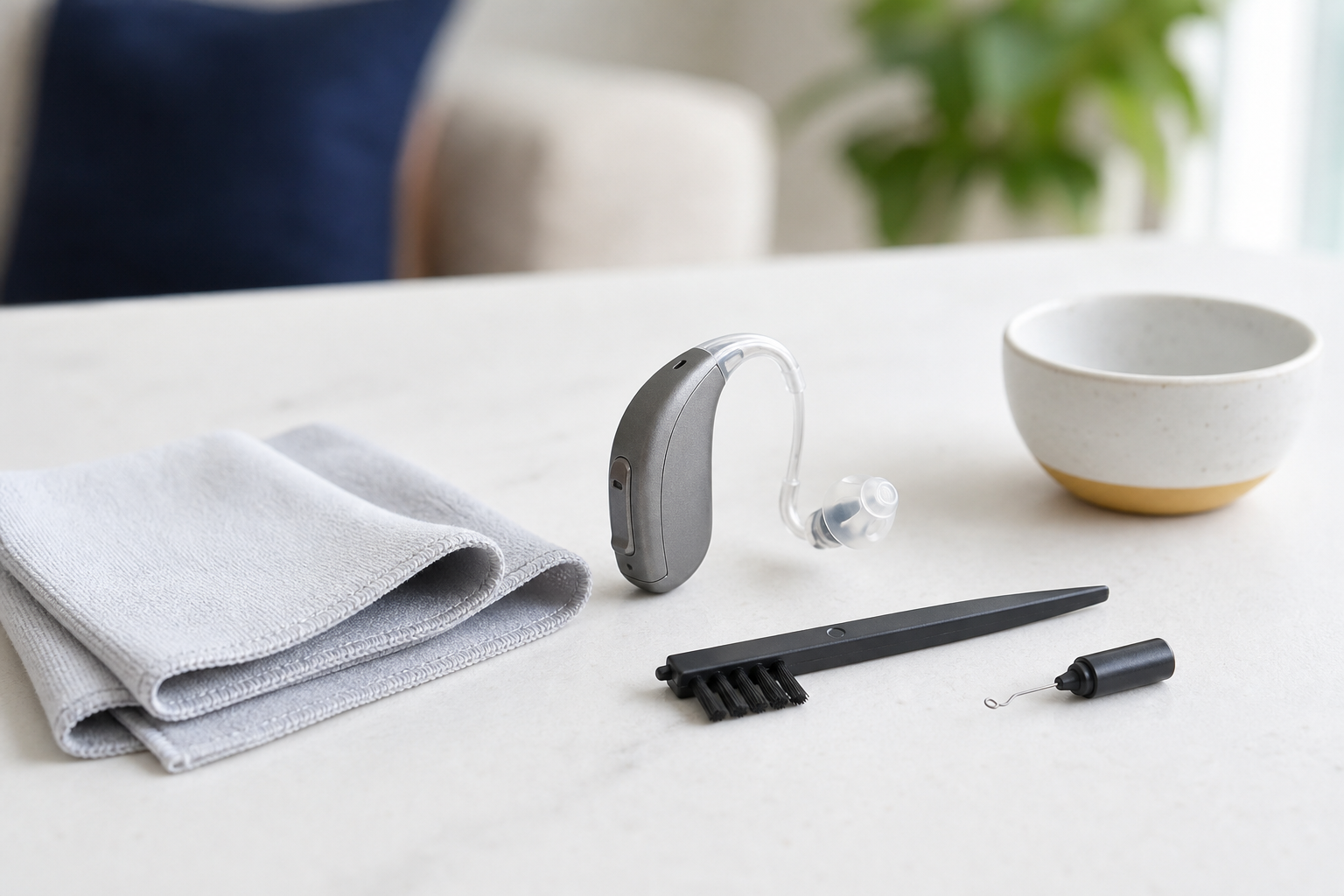
Daily use exposes a hearing aid to earwax, skin oils, dust and moisture. Safe cleaning means gently removing surface debris with dry, model-appropriate tools—not washing the device or applying household cleaners.
Before you start
Wash and dry your hands, choose a well-lit dry table and switch the device off. Open the battery door on replaceable-battery models. Keep liquids, sprays and sharp household tools away from the device.
Safe cleaning steps
Wipe the outer shell with a clean, dry, lint-free cloth.
Hold microphone openings downward and use a soft device brush to remove loose debris.
Inspect the dome or earmould without pushing objects into narrow openings.
Check the wax filter and replace it only with the correct model-specific part and tool.
Check BTE tubing for stiffness, cracks, discolouration or visible moisture.
Make sure the device is completely dry before storage or charging.
What to avoid
Do not use alcohol, cologne, wet wipes, cleaning spray, compressed air or direct heat. Never rinse the hearing aid or dry it with a hair dryer, radiator or strong sunlight. The manufacturer’s instructions for your model always take priority.
When technical service is needed
Sound remains weak or intermittent after cleaning.
The filter becomes blocked again very quickly.
You notice moisture, greenish oxidation or an unusual smell.
A microphone grille, tube, cable, case or battery door is damaged.
Before requesting service
- Device switched off
- Hands and table completely dry
- Only suitable tools used
- Filter and sound outlet inspected
- Device stored dry
Nokta Hearing Technical Service
This article is limited to technical device care, use and service preparation. It is not medical diagnosis or treatment advice.
Published and updated: 22 July 2026Questions about this topic
Should I clean my hearing aid every day?
A gentle dry wipe can be part of a daily routine. More detailed maintenance depends on the model and conditions of use.
Can I clean it with alcohol?
No. Alcohol and household cleaning products may damage coatings, seals and microphone components.
Can I replace the wax filter myself?
Only if you have the correct filter and tool for the model and can follow its instructions without forcing the part.