
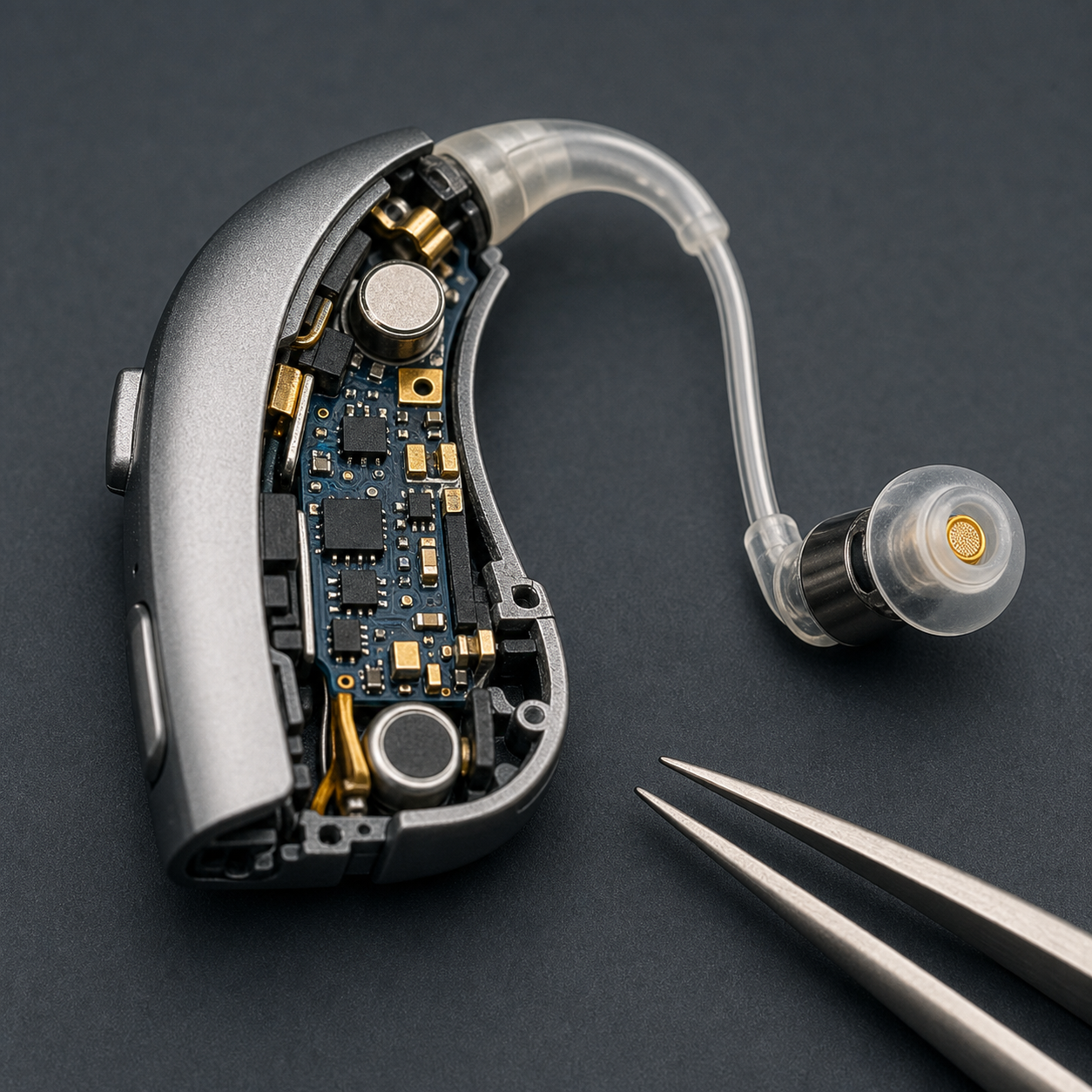
Hearing aid repair requires systematic inspection when a device has weak sound, no power, crackling, charging faults or intermittent operation. Some causes can be checked safely by the user, while receiver, microphone, moisture and internal electronic faults require technical assessment.
Safe checks before requesting service
Confirm that the device is switched on and using the intended programme.
Try a fresh correct battery, or fully recharge a rechargeable model on dry contacts.
Inspect the wax filter, dome and accessible sound outlet visually.
Check BTE earmould and tubing for blockage, cracks or loose connection.
Restart the device and note where and when the symptom occurs.
Do not open the case, pull receiver wiring or insert objects into microphone openings.
Symptoms that need technical inspection
The device does not power on
Weak, muffled or distorted sound
Crackling, humming or unexpected noise
Intermittent sound
Fast battery drain
Failure to charge reliably
Damage to tubing, receiver wiring, battery door or case
Moisture, oxidation, heat or unusual smell
Why does a hearing aid whistle?
Whistling may result from incomplete placement, earmould or dome fit, high volume, cracked tubing, blockage or acoustic feedback. Reinsert the device and inspect visible parts, but request professional fitting or technical assessment if the problem continues.
How the repair process works
Brand, model, device type and reported symptom are recorded.
External parts, battery or charging contacts, filters, tubing and connections are inspected.
Microphone input, receiver output and power paths are checked as appropriate.
Moisture, oxidation and physical damage are assessed.
Available work, parts and cost are explained.
Approved work is completed and operation is checked before return.
Components that may require attention
Depending on the fault, filters, domes, tubing, battery doors, battery or charging contacts, receivers, microphones, wiring and case components may be assessed. Compatibility and parts availability differ by model.
Repair and programming are different
Technical repair focuses on physical and electronic operation. Programming and personal sound settings depend on hearing assessment and fitting and should be handled by an appropriate hearing-care professional.
Cleaning before repair
Use only a dry lint-free cloth and model-appropriate brush for accessible surfaces. Do not use alcohol, wet wipes, sprays, compressed air, sharp objects or water on the electronic device or RIC receiver.
Repair while the warranty continues
Follow the manufacturer or importer instructions in the warranty document. Unauthorised intervention or opening the device may affect warranty assessment. If you need an authorised service, verify its identity through official sources.
Choosing a technical service
Verify the business address and contact information.
Confirm authorised-service claims through the manufacturer and official records.
Request an intake record with the model and reported symptom.
Be cautious with guaranteed price, time or repair claims before inspection.
Approve the described work and cost before paid work begins.
Keep the service document showing completed work and replaced parts.
Nokta Hearing service approach
Nokta Hearing operates as an independent multi-brand technical service with intake at Bozyaka and Yesilyurt. Devices from outside Izmir may be sent by courier after prior contact. Available work and cost are explained after inspection, and no paid work begins without approval.
Before requesting service
- Battery or charging status checked
- Filter and accessible parts inspected
- Conditions that trigger the symptom recorded
- Case not opened and wiring not forced
- Warranty document and service terms checked
- Work and cost approved before repair
Nokta Hearing Technical Service
This article is limited to technical device care, use and service preparation. It is not medical diagnosis or treatment advice.
Published and updated: 23 July 2026Questions about this topic
Can a hearing aid be repaired?
Many faults can be assessed, but repairability depends on the device, damage and parts availability.
Why is there no sound?
Possible causes include the battery, charging, blocked filters, receiver, microphone, connections or moisture.
How long does repair take?
Timing depends on the fault, required tests and parts. It cannot be confirmed responsibly before inspection.
Can an out-of-warranty device be serviced?
Yes, it can be assessed. Available work and cost are explained after inspection.