
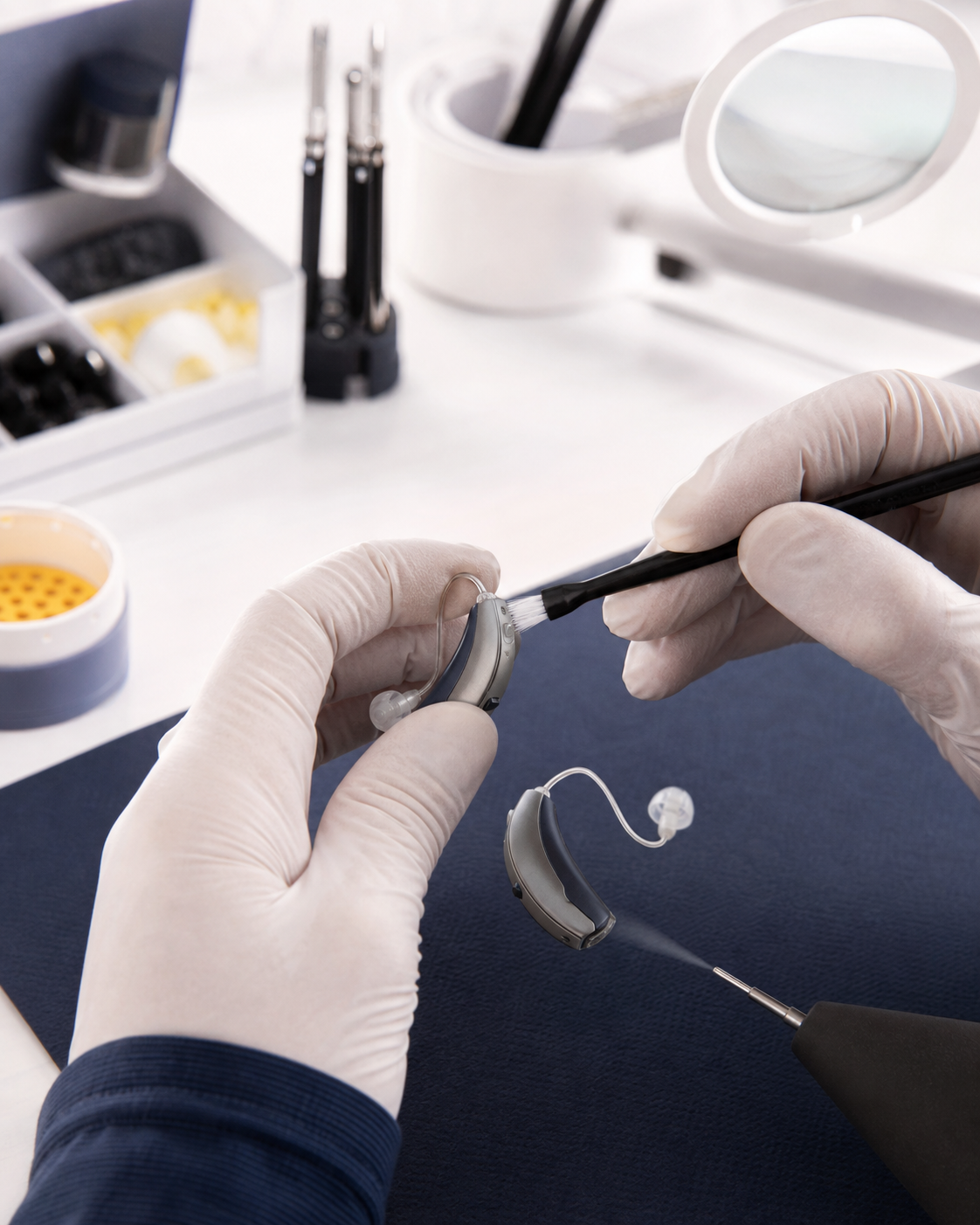
Hearing aid maintenance helps control earwax, dust and moisture, monitor user-replaceable parts and identify performance changes early. Safe care means following model-specific instructions, using dry tools and requesting technical support when cleaning does not resolve a problem.
Why hearing aid maintenance matters
Daily use exposes a hearing aid to skin oils, earwax, dust, perspiration and environmental moisture. These can affect filters, sound outlets, microphone openings and charging contacts. Regular dry cleaning may reduce build-up, but it does not replace repair when an electronic or mechanical fault exists.
Signs that may require maintenance or inspection
Noticeably reduced volume
Muffled or distorted sound
Whistling, humming or crackling
Complete loss of sound
Intermittent sound
Repeated wax-filter blockage
Charging irregularities or changed battery use
Visible wear on tubing, domes, receiver wiring or the case
How often should maintenance be performed?
There is no single interval for every user. The manufacturer instructions, device type, usage intensity, earwax, perspiration and humidity all affect maintenance needs. Do not wait for a planned date if sound changes, moisture exposure or physical damage occurs.
Understanding hearing aid warranty
Statutory product warranty is based on the warranty document issued by the manufacturer or importer and generally begins at delivery. Check the document for the exact duration, coverage and procedure. A warranty offered for a paid repair or replacement part is separate and should be stated clearly on the service document.
Situations that may affect warranty assessment
Impact, crushing or drop damage
Water or prolonged moisture exposure
Cleaning with sharp or hard objects
Forcing receiver wiring, battery doors or connections
Use of unsuitable chemicals, sprays or wet products
Exposure to high heat or improper drying
Opening the device outside the process allowed by the warranty terms
Safe cleaning at home
Choose a dry, well-lit and soft work surface.
Wash and completely dry your hands, then switch the device off.
Wipe the shell with a dry lint-free cloth.
Hold microphone openings downward and remove loose debris with a device brush.
Inspect the wax filter and use only the correct model-specific replacement.
Make sure the device and charging contacts are completely dry.
BTE earmould and tubing care
Only an earmould that can be fully separated from the electronic device may be cleaned according to its model instructions. Make sure it is completely dry, including the tubing, before reconnecting it. Do not force stiff, cracked or discoloured tubing.
RIC and in-the-ear device warning
A RIC receiver is an electronic component and must not be immersed in water. In-the-ear device bodies also contain electronics. Check the manufacturer instructions or request model-specific guidance before using water or any liquid cleaner.
When professional service is needed
Request inspection if sound problems continue after safe dry cleaning, the device has been exposed to moisture, or oxidation, smell, heat or physical damage is present. Nokta Hearing operates as an independent multi-brand technical service and explains available work and cost before paid work begins.
Before requesting service
- Device switched off
- Hands and work surface dry
- Only model-appropriate dry tools used
- Filter, outlet and microphone openings inspected
- Electronic components kept away from water
- Ongoing problems referred for technical support
Nokta Hearing Technical Service
This article is limited to technical device care, use and service preparation. It is not medical diagnosis or treatment advice.
Published and updated: 23 July 2026Questions about this topic
Is annual maintenance required for every hearing aid?
No single interval applies to every device. Follow manufacturer instructions and consider use, moisture, earwax and device type.
Can I use a wet wipe?
It is generally not recommended. Unknown ingredients may affect coatings, microphone openings and contacts.
Can an earmould be washed?
Only some fully detachable non-electronic BTE earmoulds, when their model instructions allow it. RIC receivers and electronic parts must not be immersed.
Can an out-of-warranty device be repaired?
It can be assessed, but repairability depends on the fault, device condition and parts availability.