
A hearing test is a group of measurements used to assess the quietest sounds heard at different frequencies, speech discrimination and selected parts of the auditory system. Results are not simply pass or fail: right and left ear thresholds, speech performance and other findings are interpreted together.
What are hearing tests and audiometry?
Audiometry is a core method for measuring hearing. Responses to sounds at different frequencies and levels are recorded on an audiogram. The appropriate test set depends on age, symptoms, ENT examination, previous results and the clinical question.
Who may need assessment?
Difficulty following speech or conversations in noise
Repeatedly increasing television or telephone volume
A perceived difference between ears
Tinnitus with a change in hearing
Significant occupational or recreational noise exposure
Concern about a child’s response to sound or speech development
Reduced benefit from an existing hearing aid
Sudden hearing change is urgent
Do not wait for a routine appointment if a marked hearing reduction begins suddenly, particularly with tinnitus or dizziness. Seek urgent medical or ENT assessment and do not assume the cause is hearing-aid failure.
How a hearing test is performed
Symptoms and their daily effect are recorded.
An ENT examination may be completed when indicated.
Instructions and the response method are explained.
Right and left ears are assessed at different frequencies.
The lowest reliably heard levels are recorded.
Bone-conduction, speech or middle-ear tests may be added.
Findings are interpreted by the relevant professional.
Pure-tone, air and bone conduction
Pure-tone audiometry helps establish hearing thresholds. Air-conduction testing reflects the combined pathway through the outer, middle and inner ear. Bone-conduction testing delivers vibration through the skull and comparison with air conduction helps a professional assess the likely type of loss.
Speech audiometry
Hearing a tone and correctly understanding words are not the same. Speech testing can assess speech reception and word recognition, providing additional information for rehabilitation and hearing-aid planning.
Tympanometry
Tympanometry uses controlled pressure through an ear-canal probe to provide information about the eardrum and middle-ear system. It complements rather than replaces audiometry.
OAE and BERA/ABR
OAE measures responses generated by parts of the inner ear through a small probe. BERA/ABR records auditory-nerve and brainstem responses using surface electrodes. They are different tests selected according to age and clinical need.
Testing children
Newborns and young babies may be screened with OAE or automated ABR. Visual reinforcement or play-based methods may be used as development allows. Not passing a screening test is not itself a diagnosis, but follow-up should not be delayed.
Preparing for the appointment
Bring previous audiograms and ENT reports.
Bring both hearing aids and their charger or batteries.
Record when symptoms began and where they are most noticeable.
Report tinnitus, dizziness, noise exposure and current medicines.
Tell staff if you were exposed to intense noise shortly before testing.
Understanding the audiogram
The horizontal axis represents frequency and the vertical axis represents the level needed to hear. Symbols may distinguish ears and air or bone conduction. Interpretation also considers speech scores, tympanometry, ENT findings, onset and changes from previous tests.
Types of hearing loss
These classifications require professional assessment and cannot be determined from symptoms alone.
Conductive: may relate to sound transmission through the outer or middle ear.
Sensorineural: may relate to the inner ear or auditory nerve.
Mixed: includes conductive and sensorineural components.
What happens after a hearing loss result?
An ENT physician considers treatable causes and whether further investigation is needed. If amplification or rehabilitation is recommended, hearing level, speech performance, anatomy, daily needs and handling should guide selection. An audiogram is an important starting point for fitting, but follow-up and user feedback are also required.
Are online hearing tests enough?
Online and mobile tools can provide screening information, but headphones, device output and background noise affect results. The World Health Organization states that its screening tool is not diagnostic and does not replace qualified hearing-care assessment.
Hearing assessment and device service are different
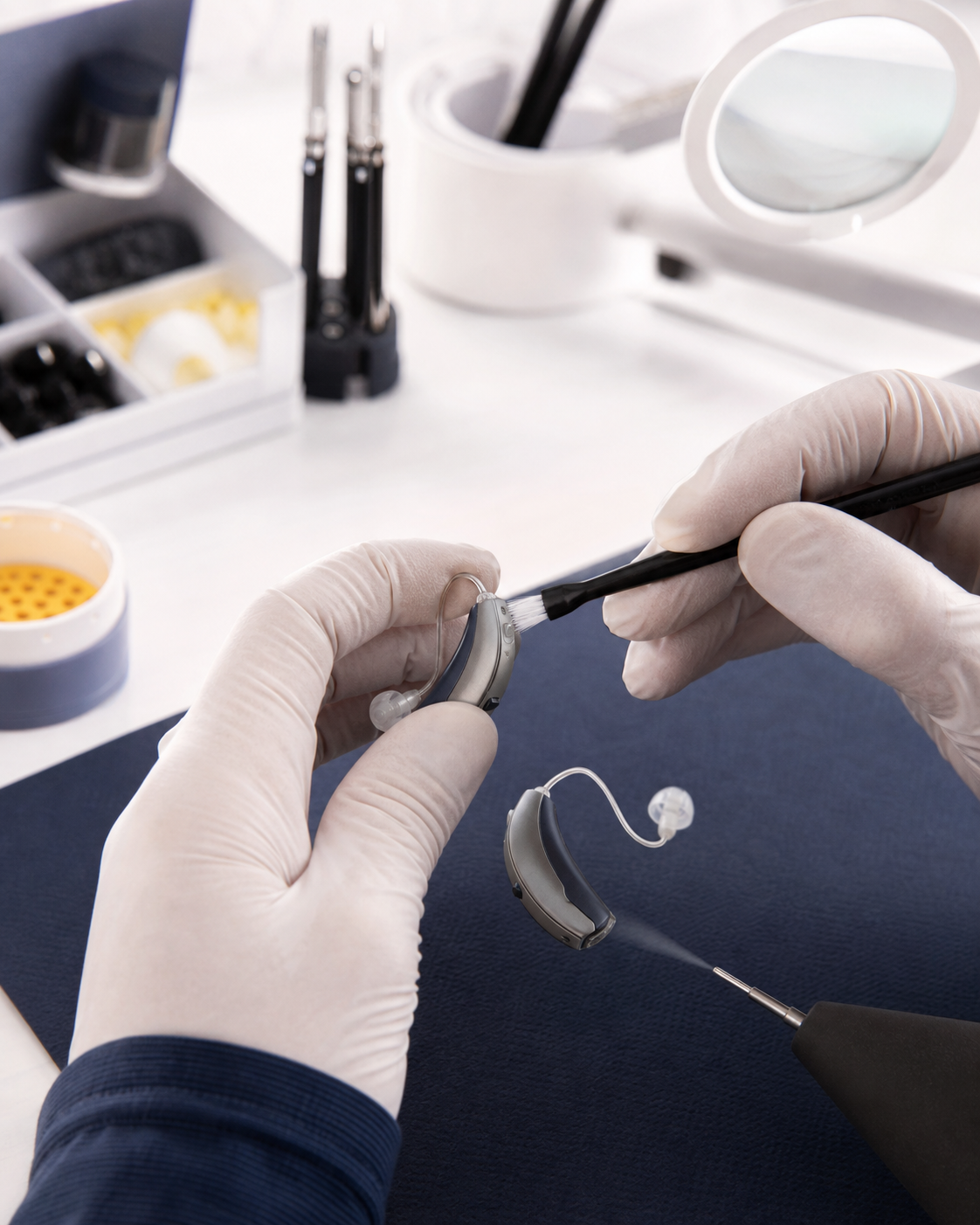
A hearing test assesses the person. Technical service assesses filters, microphones, receivers, power and charging systems in the device. Sudden personal hearing change needs medical assessment; no sound, intermittent operation or charging failure may also require technical inspection.
Where are hearing tests performed in Izmir?
Tests may be available through public, university and private health institutions with suitable ENT or audiology units. Confirm the test, age group and appointment pathway before travelling. See the separate Izmir hospital guide for a source-checked list.
Before requesting service
- Urgent symptoms not left for a routine appointment
- Previous tests and reports prepared
- Symptom onset and environments recorded
- Hearing aids brought to the appointment
- Online screening not treated as diagnosis
- Professional interpretation planned
Nokta Hearing Technical Service
This article is limited to technical device care, use and service preparation. It is not medical diagnosis or treatment advice.
Published and updated: 23 July 2026Questions about this topic
Which department provides a hearing-test referral?
The usual starting point is ENT, which may request audiometry or audiology assessment.
How long does a hearing test take?
It varies with the test set, age and response method. A single pure-tone test and a comprehensive assessment take different amounts of time.
Does a hearing test hurt?
Standard audiometry is non-invasive. Tympanometry may produce brief pressure; report discomfort to the clinician.
Do I need to fast?
Fasting is generally not needed for standard audiometry. Follow institution instructions if another procedure is planned.
Is an online hearing test diagnostic?
No. It may screen for possible difficulty but does not replace professional audiometry and ENT assessment.
Should sudden hearing loss wait for an appointment?
No. Seek urgent medical or ENT assessment for a sudden marked hearing change.